• 22+ Years Air Conditioning Experience
• Certified AC Technicians
• Leak Detection Before Regassing
• Proper Vacuum & Pressure Testing
• Split, Inverter & Commercial Systems
• Same-Day Aircon Repairs Durban
• Transparent Upfront Quotations
If your air conditioner is running but blowing warm or lukewarm air, especially during Durban’s brutal summer heat, the most likely cause is low refrigerant gas. This is one of the most common air conditioning faults in Durban and one of the most straightforward to fix when handled correctly by a certified technician. Our mobile units carry R22, R410A and R32 refrigerant gas, and we regas all aircon makes and models across all Durban areas on the same day you call.
But here is something most Durban aircon companies will not tell you: a regas without finding and fixing the leak that caused the low refrigerant is a temporary fix that will fail again. Refrigerant does not evaporate or get used up during normal operation. If your aircon is low on gas, there is a leak somewhere in the system. Regassing without repairing the leak means the new gas will escape again, leaving you paying for another regas in 3 to 6 months. Our technicians always check for the leak source before regassing and repair it before recharging the system. That is the correct process. That is what protects your compressor and gives you a lasting result.
Appliance Repairs Durban has been regassing and repairing air conditioning units across all Durban areas for 22 years. Our certified technicians operate in fully-equipped mobile units that carry professional gauge sets, leak detection equipment and all three common refrigerant types. When we arrive at your home or business in Umhlanga, Westville, Chatsworth, Pinetown, Morningside, Hillcrest, Bluff or anywhere across the Durban metro, the regas begins immediately. No scheduling a gas delivery. No second visit. One call, one visit, cold air.
Every regas we complete comes with a full written quote before any work begins and a 6-month workmanship guarantee on all labour and leak repairs performed. No hidden charges. No surprise bill at the end. Just fast, honest and professional aircon regassing from the team Durban has trusted since 2003.
WhatsApp +27 79 976 2941 — We Reply Within Minutes
Call +27 79 976 2941
Mobile units available today — all Durban areas
Not sure whether your aircon needs a regas or a different type of repair? Here are the specific signs that point to low refrigerant as the cause of your aircon problem.
This is the most obvious sign. An aircon that is running, with the compressor operating and the fan blowing, but producing warm or barely cool air instead of cold air, usually has insufficient refrigerant to achieve proper heat exchange. In Durban’s heat, a low-refrigerant aircon becomes noticeably ineffective even on moderate temperature days. On peak summer days it provides virtually no relief at all.
If your aircon used to cool the room in 10 minutes and now takes 30 to 40 minutes, or never quite reaches the set temperature, the refrigerant level has likely dropped to the point where cooling capacity is significantly reduced. This gradual decline is the most common presentation of a slow refrigerant leak. The performance drop is often so gradual that many Durban homeowners do not realise there is a fault until the unit is barely cooling at all.
Counterintuitively, low refrigerant causes ice to form, not because the unit is too cold but because the reduced refrigerant pressure causes the evaporator coil temperature to drop below freezing. Ice forms on the evaporator coil and sometimes on the copper pipes connecting the indoor and outdoor units. An iced-up aircon must be switched off immediately to allow the ice to melt before a proper regas can be performed. Running an iced-up aircon accelerates compressor damage.
An aircon with low refrigerant runs for significantly longer periods trying to achieve the set temperature, consuming far more electricity than a correctly charged unit. If your electricity bill has increased noticeably and your aircon seems to be running constantly without cooling effectively, a regas is likely required.
A hissing sound from the indoor or outdoor unit often indicates refrigerant escaping through a leak point. A bubbling or gurgling sound, particularly in the refrigerant lines, indicates irregular refrigerant flow caused by low gas levels. Either sound, together with reduced cooling performance, is a strong indicator of a refrigerant leak requiring leak repair and regas.
A unit with slightly low refrigerant may cool adequately when the ambient temperature is moderate but cannot meet the increased cooling demand on very hot Durban days. If your aircon was fine during Durban’s mild winter and started struggling as summer temperatures climbed, a refrigerant leak that slowly developed over the cooler months is the most likely cause.
An aircon that runs non-stop but never turns off because it never reaches the set temperature is working harder than it should and consuming excessive electricity. In most cases, this is caused by low refrigerant reducing the unit’s cooling capacity to the point where it cannot achieve the set temperature no matter how long it runs.
This is the most important thing to understand about aircon regassing, and the reason why acting quickly when you notice the signs of low refrigerant can save you from a much more expensive repair.
The refrigerant in your air conditioner does two things. It carries heat from inside your home to outside, and it carries lubricating oil around the compressor. When refrigerant levels drop, oil circulation is reduced and the compressor runs without enough lubrication. At the same time, the compressor runs hotter because it has insufficient refrigerant to cool it during the compression cycle.
A compressor running hot and without proper lubrication wears rapidly. Left long enough, a low refrigerant situation that could have been resolved with a R650 regas becomes a compressor replacement costing R1,500 to R3,500. The longer a low-refrigerant aircon runs, the more damage accumulates in the compressor.
If you have noticed the signs of low refrigerant, warm air, ice forming, longer cooling times or a higher electricity bill, do not delay.
WhatsApp us on +27 79 976 2941 today.
We follow the correct professional regassing process on every job, not the quick shortcut of simply topping up the gas without checking for the leak first.
Our technician connects professional gauge sets to the service ports on your outdoor unit and measures the current refrigerant pressure. This confirms whether low refrigerant is the cause of the cooling problem and identifies the current charge level.
If the refrigerant level is confirmed as low, our technician uses professional leak detection equipment, including an electronic leak detector and UV dye where appropriate, to locate the source of the leak. Common leak locations include flare nut connections at the indoor and outdoor units, the evaporator coil, the condenser coil and the copper refrigerant pipes.
Once the leak is located, it is repaired before any gas is added. Common leak repairs include retightening or replacing flare nut connections, brazing pinholes in evaporator or condenser coils and replacing damaged sections of copper pipe. A regas without this step is only a temporary fix because the new gas will escape through the same leak point.
After the leak is repaired, the system is fully evacuated using a vacuum pump to remove any air and moisture that entered the system through the leak point. Moisture in the refrigerant system causes acid formation that destroys the compressor from the inside. This step is critical and is frequently skipped by less thorough technicians.
The system is recharged with the correct refrigerant type, R22, R410A or R32, to the manufacturer’s specified pressure for your specific aircon model. Overcharging is just as damaging as undercharging. The correct charge is determined by pressure measurement against the manufacturer’s specification, not by guesswork or a fixed quantity.
Once recharged, the unit is run through a full cooling cycle. Outlet air temperature is measured to confirm correct cooling performance. Refrigerant pressures are rechecked under operating conditions to confirm the correct charge. The unit is confirmed to be cooling correctly before our technician leaves your property.
You receive a 6-month workmanship guarantee on all labour and leak repairs performed. If the same leak recurs within 6 months, we return and fix it at no additional charge.
Our mobile units carry all three common refrigerant types used in South African air conditioners.
Used in older air conditioners manufactured before approximately 2010. R22 is being phased out globally due to its ozone-depleting properties and is becoming increasingly expensive and difficult to source in South Africa. If your aircon uses R22 and has a significant leak, the cost of ongoing regassing should be weighed against the cost of replacing the unit with a modern R410A or R32 model. Our technicians will give you an honest recommendation at the time of their visit.
Regassing cost — R900 to R1,500 depending on quantity required
The most common refrigerant in air conditioners manufactured between approximately 2010 and 2020. It is widely available in South Africa, does not deplete the ozone layer and is the refrigerant used in the majority of Durban split air conditioners currently in service.
Regassing cost — R650 to R1,000 depending on quantity required
Used in most modern air conditioners manufactured from approximately 2018 onwards. R32 has a lower global warming potential than R410A, is more energy efficient and requires a smaller quantity to achieve the same cooling effect. It is increasingly common in new Durban installations.
Regassing cost — R650 to R950 depending on quantity required
Not sure which refrigerant your aircon uses? Check the label on the outdoor unit or the back panel of the indoor unit. The refrigerant type is listed there. You can also WhatsApp us on +27 79 976 2941 and we will confirm it based on your aircon brand and model.
We publish our pricing openly, with no call-us-for-a-quote runaround.
This covers your technician travelling to your Durban home or business, checking refrigerant levels, diagnosing the fault and providing a full written quote. The call-out fee is waived if you proceed with the regas.
R410A regas — R650 to R1,000 depending on quantity of gas required
R32 regas — R650 to R950 depending on quantity of gas required
R22 regas — R900 to R1,500 depending on quantity of gas required due to increasing scarcity
Flare nut connection repair — R350 to R550
Evaporator or condenser coil pinhole repair — R550 to R1,200
Copper pipe section replacement — R450 to R1,500 depending on extent
There is no additional charge for the evacuation process. It is included as part of the correct regas procedure on every job.
All costs are communicated in a full written quote before any work begins. You approve every line item before we proceed. No hidden charges. No surprise bill at the end.
Our certified technicians regas all major aircon brands across Durban including:
Carrier aircon regassing Durban
Daikin aircon regassing Durban
York aircon regassing Durban
Midea aircon regassing Durban
Gree aircon regassing Durban
Samsung aircon regassing Durban
LG aircon regassing Durban
Hisense aircon regassing Durban
Bosch aircon regassing Durban
Hitachi aircon regassing Durban
Panasonic aircon regassing Durban
Toshiba aircon regassing Durban
Fujitsu aircon regassing Durban
Haier aircon regassing Durban
TCL aircon regassing Durban
Aux aircon regassing Durban
Do not see your brand? WhatsApp us on +27 79 976 2941 — we most likely regas it.
Our mobile units cover the entire Durban metro daily. Same-day aircon regassing is available across:
Umhlanga, La Lucia, Durban North, Ballito, Tongaat, Mount Edgecombe, Phoenix and Verulam
Berea, Morningside, Musgrave, Glenwood, Overport, Durban CBD, Sydenham and Greyville
Bluff, Isipingo, Amanzimtoti, Montclair, Wentworth, Yellowwood Park, Malvern and Merebank
Pinetown, Westville, Hillcrest, Kloof, Chatsworth, Queensburgh, New Germany and Gillitts
Not sure if we cover your suburb? WhatsApp us your area on +27 79 976 2941 and we will confirm within minutes.
Most aircon companies in Durban have to schedule a gas delivery before they can regas your unit, which means two visits minimum before you have cold air. Our mobile units carry R22, R410A and R32 refrigerant. Whatever refrigerant your aircon uses, we regas it on the same-day visit.
A regas without finding and fixing the leak is a temporary fix that benefits the repair company more than the customer. You will need another regas in a few months. We locate and repair the leak before recharging the system. This is the correct process. It protects your compressor and gives you a lasting result.
Moisture in the refrigerant system causes acid formation that destroys compressors from the inside. After repairing the leak, we fully evacuate the system before recharging. This step is frequently skipped by less thorough technicians. We never skip it.
Overcharging is as damaging to a compressor as undercharging. We recharge to the manufacturer’s specified pressure for your specific aircon model, measured with calibrated gauges. Not a fixed quantity. Not a guess. The correct charge every time.
We have been regassing air conditioners in Durban since 2003. We know exactly how Durban’s coastal environment causes refrigerant leaks. Salt air corrosion of copper pipes and coils is one of the leading causes of refrigerant leaks in Durban’s coastal suburbs, and we know where to look first when diagnosing a leak. That experience means faster diagnosis and more accurate leak repairs on every job.
Every regas and leak repair we perform comes with a 6-month workmanship guarantee in writing. If the same leak recurs within 6 months, we return and fix it at no additional charge.
Aircon regassing in Durban costs between R650 and R1,500 depending on the refrigerant type and quantity required. R410A regassing costs between R650 and R1,000. R32 regassing costs between R650 and R950. R22 regassing costs between R900 and R1,500 due to the increasing scarcity of R22 refrigerant. Leak repair is quoted separately and costs between R350 and R1,500 depending on the location and extent of the leak. Our call-out fee of R350 is waived if you proceed with the regas. You will always receive a full written quote before any work begins.
A correctly performed aircon regas, where the leak is located and repaired before regassing, should last the lifetime of the aircon system. Refrigerant does not get used up during normal operation. If your aircon needs regassing again within a year of a previous regas, the leak was not correctly identified and repaired the first time. Our regassing process always includes leak detection and repair before recharging, which is why our results last.
Refrigerant leaks typically develop gradually, starting as a very slow leak that causes the refrigerant level to drop over months until the level becomes too low to cool effectively. In Durban’s coastal suburbs, salt air corrosion of copper refrigerant pipes and coil joints is one of the most common causes of slow refrigerant leaks. By the time cooling performance is noticeably affected, the leak has usually been developing for quite some time.
No, and there are important legal and technical reasons why. Handling refrigerants in South Africa requires certification. Correct refrigerant charging requires calibrated gauge sets to measure pressure accurately. Overcharging is just as damaging as undercharging. System evacuation requires a vacuum pump, and identifying and repairing leaks requires professional leak detection equipment. Attempting to regas an aircon without the correct equipment and certification can result in permanent compressor damage.
This is one of the most counterintuitive aircon faults. Low refrigerant causes pressure on the low-pressure side of the system to drop. Lower pressure means lower evaporating temperature, which causes the evaporator coil to fall below 0 degrees Celsius and ice to form on the coil and pipes. Switch the unit off immediately when you notice icing and allow it to thaw completely before a technician arrives.
The refrigerant type is indicated on the label on the outdoor condensing unit. It is also often shown in the product documentation and sometimes on the back panel of the indoor unit. As a rough guide, R22 units were generally made before 2010, R410A units between 2010 and 2018 and R32 units from approximately 2018 onwards. If you cannot find the label, WhatsApp us your aircon brand and model and we will confirm it.
No, our regassing prices are competitive with the national market. However, if your aircon uses R22 refrigerant, the cost is higher than R410A or R32 regardless of location because R22 is being phased out globally and has become more expensive as availability decreases.
Not all refrigerant leaks can be completely prevented, but the risk can be reduced significantly. Annual professional servicing, proper anti-vibration installation, anti-corrosion coil coating in coastal areas and surge protection can all reduce the risk of developing a leak.
Yes. We regas portable air conditioners, window units and through-wall units across all Durban areas in addition to split units and cassette systems. The same process applies: refrigerant level check, leak detection, leak repair, system evacuation and recharge to the correct specification.
If the unit is iced up, switch it off immediately and allow the ice to melt completely. Do not keep lowering the thermostat, as that will not improve performance on a low-refrigerant system and may place more stress on the compressor. Check and clean the filter if it is accessible, note when the cooling decline started and whether a load shedding outage or unusual noise happened around the same time, and keep the room as cool as possible by closing blinds and curtains.
If your air conditioner is blowing warm air, taking too long to cool, icing up or running constantly without reaching the set temperature, do not wait until low refrigerant damages the compressor.
Appliance Repairs Durban provides same-day aircon regassing across all Durban areas using the correct professional process: leak detection, leak repair, system evacuation and precise refrigerant recharge.
Call +27 79 976 2941
WhatsApp +27 79 976 2941
Fast, honest and professional aircon regassing across Durban.

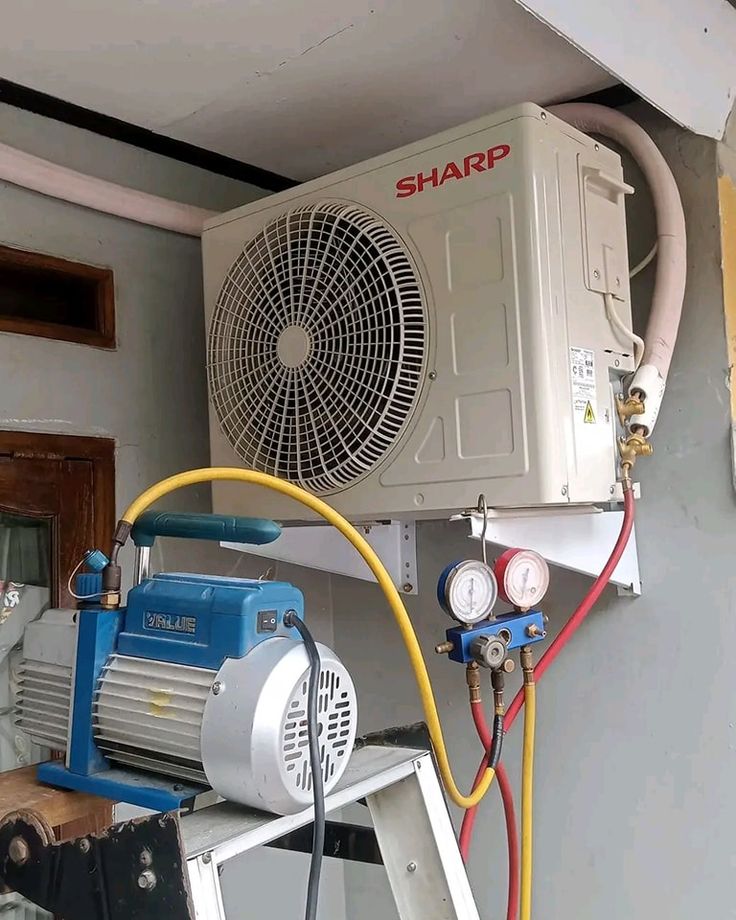
Do not suffer another day of warm air blowing from your aircon in Durban’s heat. Low refrigerant gas is the most common cause — and our certified technicians are in fully-equipped mobile units across Durban right now carrying R22, R410A and R32 refrigerant gas for all makes and models. We find the leak, fix the leak and regas correctly in a single visit. Not a temporary top-up that fails again in 3 months. A proper, lasting regas with a 6-month guarantee.
One WhatsApp. One visit. Cold air — guaranteed.
WhatsApp +27 79 976 2941 — We Reply Within Minutes
Call +27 79 976 2941
Same-day aircon regassing across all Durban areas — North, South, Central and West
22 Years Experience · R22, R410A and R32 Refrigerant · Leak Detection Included · Leak Repair Included · System Evacuation Included · 6-Month Guarantee · All Major Brands · Transparent Pricing
No hidden fees · Full written quote before we start · You only pay when you approve
When your aircon is blowing warm air in Durban’s heat you need to know exactly what is going to happen and how quickly we can have it blowing cold air again. Here is our complete regassing process from the moment you contact us to the moment your aircon is cooling correctly.
Step 1 — Contact Us by WhatsApp or Phone
Call or WhatsApp us on +27 79 976 2941. Tell us:
• Your suburb in Durban
• Your aircon brand, type and model if you have it
• The symptoms you are experiencing — blowing warm air, taking too long to cool, icing up, higher electricity bill
• Whether the symptoms started suddenly or gradually — gradual decline usually indicates a slow leak while sudden loss of cooling can indicate a more significant leak or a different fault entirely
• Whether anything happened before the cooling declined — a load shedding outage, an unusual noise or any visible changes to the unit
That is all we need. We respond within minutes and confirm same-day availability for your area. Our mobile units carry R22, R410A and R32 refrigerant gas so we can regas your unit on the same visit regardless of which refrigerant type your aircon uses — no scheduling a separate gas delivery.
What happens at this step:
• We respond within minutes
• Same-day availability confirmed for your Durban area
• Refrigerant type confirmed before dispatch so correct gas is on board
• No deposit and no commitment required
Step 2 — Certified Aircon Technician Arrives at Your Door
A certified aircon technician in a fully-equipped mobile unit is dispatched to your home or business — in most cases on the same day you contact us. The mobile unit carries:
• Professional refrigerant gauge sets for accurate pressure measurement
• Electronic leak detection equipment
• UV dye leak detection kit for difficult-to-locate leaks
• Vacuum pump for system evacuation
• R22, R410A and R32 refrigerant gas
• Brazing equipment for copper pipe leak repairs
• Common replacement parts — flare fittings, copper pipe sections, service valves
Everything required to diagnose, locate the leak, repair it and regas your aircon in a single visit is already on board when your technician arrives.
What happens at this step:
• Certified aircon technician dispatched same day in most cases
• All regassing equipment and refrigerant already on board
• Leak detection and repair equipment carried — no second visit required
• You are informed of who is coming before they arrive
Step 3 — Refrigerant Level Check and Leak Detection
When our technician arrives the first step is connecting professional gauge sets to the service ports on your outdoor unit to measure the current refrigerant pressure. This confirms:
• Whether low refrigerant is the cause of the cooling problem
• How low the refrigerant level is — partially low or completely depleted
• The operating pressures of the compressor — which can indicate compressor health independently of the refrigerant level
If the refrigerant level is confirmed as low the technician proceeds immediately to leak detection. This step is the critical difference between a proper regas and a temporary top-up that will fail again in a few months. Our technician uses:
Electronic leak detector — a sensitive instrument that detects refrigerant vapour escaping from leak points. The detector is passed systematically over all refrigerant system components — indoor unit coil connections, outdoor unit coil connections, flare nut connections at both units, the copper pipes running between units and the service valves.
UV dye method — where the leak is difficult to locate with the electronic detector a UV dye is injected into the system. The dye circulates with the refrigerant and escapes at the leak point. A UV light is then used to illuminate the escaped dye — making the exact leak location clearly visible even for very small leaks.
Common leak locations found in Durban aircons:
• Flare nut connections at the indoor or outdoor unit — the most common leak location. Flare nuts can loosen over time due to vibration and thermal expansion and contraction cycles.
• Evaporator coil pin holes — caused by formicary corrosion in copper coils — a specific type of corrosion that creates tiny pin holes. More common in Durban’s coastal humidity.
• Condenser coil corrosion — salt air corrosion of outdoor condenser coil copper tubes — the most common leak cause in Durban’s coastal suburbs including Umhlanga, La Lucia, Bluff and Amanzimtoti.
• Copper pipe damage — physical damage, vibration fatigue or corrosion along the refrigerant pipes running between indoor and outdoor units.
• Service valve packing — the service valves on the outdoor unit can develop slow leaks through the valve stem packing.
What happens at this step:
• Refrigerant pressure measured with calibrated professional gauges
• Cooling fault confirmed as low refrigerant or alternative cause identified
• Electronic leak detection performed on all refrigerant system components
• UV dye method used for difficult-to-locate leaks
• Exact leak location identified before any gas is added
• Full written quote provided — leak repair and regas costs itemised separately
• No work begins without your written approval
Step 4 — Leak Repair Before Regassing
Once the leak is located and you have approved the quote we repair the leak before adding any refrigerant. Adding gas to a leaking system is a temporary fix — the new gas escapes through the same leak point and the cooling decline begins again within weeks or months. Repairing the leak first is the only process that gives you a lasting result.
Leak repair methods used by our technicians:
Flare nut connection repair — the loose or damaged flare nut connection is carefully tightened or the flare is remade and the connection refitted. This is the most common and most straightforward leak repair — completed in 15 to 30 minutes in most cases.
Brazing — for pin holes or cracks in copper coil tubes or pipe sections the system is depressurised and the leak area is brazed using silver brazing alloy. This creates a permanent repair of the copper material at the leak point.
Pipe section replacement — where a section of copper pipe has corroded through or been physically damaged the affected section is cut out and replaced with a new copper section brazed into place.
Service valve packing replacement — the service valve stem packing is replaced with new packing material and the valve is correctly torqued.
What happens at this step:
• Leak repaired using the correct method for the leak type and location
• Flare nut repair — 15 to 30 minutes
• Brazing repair — 30 to 60 minutes
• Pipe section replacement — 45 to 90 minutes
• All repair work inspected before proceeding to evacuation
Step 5 — System Evacuation
After the leak is repaired the system is fully evacuated using a professional vacuum pump. This step is critical and is frequently skipped by less thorough technicians — but skipping it causes serious long-term damage.
Why evacuation is essential:
• When a refrigerant system leaks air and moisture enter through the leak point
• Moisture in the refrigerant system reacts with the refrigerant and compressor oil to form hydrofluoric acid
• Hydrofluoric acid corrodes the compressor internals from the inside — causing premature compressor failure that is directly attributable to moisture contamination
• Air in the system causes abnormally high operating pressures that stress the compressor and reduce cooling efficiency
The evacuation process:
• The vacuum pump is connected to the system service ports
• The system is pulled down to a deep vacuum — typically below 500 microns
• The vacuum is held and monitored — a rising vacuum indicates a leak that needs further attention before charging
• Once a stable deep vacuum is confirmed the system is ready for refrigerant charging
What happens at this step:
• System fully evacuated to remove air and moisture
• Vacuum held and monitored to confirm leak repair integrity
• System confirmed leak-free and moisture-free before charging
• This step is never skipped — it protects your compressor from moisture damage
Step 6 — Refrigerant Recharge to Manufacturer Specification
With the leak repaired and the system fully evacuated the technician recharges the system with the correct refrigerant type to the manufacturer’s specified operating pressure for your specific aircon model. This is a precise process — both overcharging and undercharging damage the compressor and reduce cooling efficiency:
Overcharging — too much refrigerant causes abnormally high operating pressures that overstress the compressor, reduce cooling efficiency and can cause liquid refrigerant to enter the compressor — causing catastrophic compressor damage.
Undercharging — too little refrigerant reduces cooling capacity, causes the evaporator to ice up and causes the compressor to run hot without adequate refrigerant flow for cooling and lubrication.
Our technicians charge to the manufacturer’s specified operating pressure for your specific model — measured with calibrated gauges and cross-referenced against the manufacturer’s pressure-temperature chart for the ambient conditions at the time of charging. This is the correct process. Not a fixed quantity. Not a guess.
What happens at this step:
• Correct refrigerant type charged — R22, R410A or R32
• Charged to manufacturer’s specified operating pressure for your model
• Pressure measured with calibrated gauges
• Ambient temperature accounted for in pressure-temperature calculation
• Neither overcharged nor undercharged — correct specification every time
Step 7 — Performance Test and Guarantee Issued
Once recharged the unit is run through a full cooling cycle and our technician performs a complete performance test before leaving your property:
Performance testing:
• Unit switched on and run for a minimum of 15 minutes
• Outlet air temperature measured at the indoor unit vents — confirmed to be cooling to the correct temperature differential below room temperature
• Suction and discharge pressures rechecked under operating conditions to confirm correct charge
• Airflow confirmed across indoor unit
• Outdoor unit confirmed running correctly — fan operating, compressor running smoothly
• No ice formation confirmed on indoor unit or outdoor pipes
• No unusual noise or vibration noted
• Drain operation confirmed — condensate draining correctly
After testing your technician will:
• Explain exactly what was found, what was repaired and how much refrigerant was added
• Issue your 6-month workmanship guarantee in writing — covering the leak repair and all workmanship
• Advise on steps to protect your aircon from future leaks — particularly important for coastal Durban suburbs where salt air corrosion is the leading cause of refrigerant leaks
• Advise on surge protection to prevent load shedding damage
• Process payment — cash, EFT or card accepted
What happens at this step:
• Full performance test — outlet temperature, operating pressures, airflow confirmed
• No ice formation confirmed
• Outdoor unit operation confirmed
• 6-month workmanship guarantee issued in writing — covering leak repair and all workmanship
• Corrosion protection and surge protection advice provided
• Payment processed — cash, EFT or card accepted
Our Promise on Every Aircon Regas in Durban
A regas that does not fix the leak is not a regas — it is a temporary top-up that puts money in the technician’s pocket and leaves you with a recurring problem. We have been doing this correctly for 22 years across every suburb in Durban — leak detection, leak repair, evacuation, correct charge, performance test, guarantee. Every time. No shortcuts. No temporary fixes. Just cold air that lasts.
1. What exactly is refrigerant gas and what does it do in an air conditioner?
Refrigerant is the chemical substance that circulates continuously through your air conditioning system and makes cooling possible. Understanding what it does helps explain why low refrigerant causes the specific problems it does:
The refrigerant cycle works as follows: • Inside your home the refrigerant flows through the evaporator coil in the indoor unit in a low-pressure liquid state. As it absorbs heat from your room air it evaporates into a gas — this is the heat absorption process that cools your room. • The refrigerant gas travels to the outdoor unit where the compressor compresses it into a high-pressure hot gas • The hot compressed gas flows through the condenser coil in the outdoor unit where the outdoor fan blows air over the coil and the heat absorbed from your room is expelled outside • The refrigerant cools and condenses back into a liquid, passes through the expansion valve which drops the pressure, and returns to the indoor unit to begin the cycle again
The refrigerant never gets used up in this process — it cycles continuously. This is why low refrigerant always means there is a leak somewhere. The refrigerant carries both heat and lubricating oil around the compressor — which is why low refrigerant damages the compressor through both overheating and inadequate lubrication simultaneously.
2. How long does the aircon regassing process take from start to finish?
The total time for a complete professional aircon regas in Durban depends on what is found during the leak detection process:
Simple regas with minor leak repair — 60 to 90 minutes: • Pressure check — 10 minutes • Electronic leak detection — 15 to 20 minutes • Minor leak repair such as flare nut retightening — 15 to 20 minutes • System evacuation — 20 to 30 minutes • Refrigerant recharge — 15 to 20 minutes • Performance test — 15 minutes
Regas with brazing repair — 90 to 150 minutes: • Pressure check and leak detection — 25 to 30 minutes • Brazing repair of pin hole or crack — 30 to 45 minutes • System evacuation — 20 to 30 minutes • Refrigerant recharge and performance test — 30 minutes
Regas with pipe section replacement — 2 to 3 hours: • Diagnosis and leak location — 30 minutes • Pipe section replacement and brazing — 45 to 90 minutes • Evacuation, recharge and performance test — 45 to 60 minutes
Our technician will give you a time estimate when they have diagnosed the leak type and location — before any work begins.
3. Why does my aircon lose refrigerant faster in summer than winter?
Several factors cause refrigerant leaks to become more noticeable or to worsen during summer months in Durban:
• Thermal expansion — refrigerant pipes and fittings expand and contract with temperature. In Durban’s hot summers the thermal expansion of copper pipes and flare fittings is greater than in winter — slightly opening existing micro-leak points that were barely leaking during cooler months • Higher operating pressures — in summer the aircon runs at higher pressures due to the higher ambient temperature. Higher system pressure forces refrigerant through existing small leak points faster than lower winter pressures • Increased usage — in Durban’s summer the aircon runs for longer daily periods increasing the number of pressure and temperature cycles and the total hours of stress on refrigerant system joints and connections • Compressor running at capacity — in peak Durban summer heat the compressor runs at or near maximum capacity for extended periods — creating more vibration and thermal stress on refrigerant connections than partial-load winter operation
This is why many Durban homeowners notice their aircon losing cooling performance at the start of summer — the slow leak that developed during the cooler months becomes apparent when summer demand increases.
4. Can a refrigerant leak cause health problems?
Modern refrigerants — R410A and R32 — are not acutely toxic at the concentrations that would be present from a typical residential aircon leak. However there are important health and safety considerations:
R410A and R32 are heavier than air and can displace oxygen in poorly ventilated enclosed spaces at very high concentrations. In a normally ventilated home this is not a practical concern — the quantities involved in a typical residential aircon leak are far too small to reach dangerous concentrations.
R410A and R32 should not be inhaled directly — deliberate inhalation causes asphyxiation and cardiac sensitisation. Keep children away from hissing refrigerant leaks.
R32 is mildly flammable — classified as A2L refrigerant. In the quantities present in a residential aircon system the flammability risk is very low under normal conditions. However avoid open flames near a known R32 refrigerant leak.
R22 — the older refrigerant — is not toxic at low concentrations but its combustion products are extremely toxic. Keep R22 away from open flames.
The practical advice — if you hear a loud hissing from your aircon indicating a significant refrigerant leak ventilate the area and call us on +27 79 976 2941. For the slow gradual leaks that are most common in Durban aircons there is no meaningful health risk in a normally ventilated home.
5. Why does my newly installed aircon already need regassing?
A new aircon that requires regassing shortly after installation has almost certainly suffered one of the following installation faults:
• Incorrect flaring — the most common installation fault. The copper pipes connecting the indoor and outdoor units are connected using flared fittings. If the flare is made incorrectly — wrong angle, uneven surface, micro-cracks — the connection leaks from the first day of operation. This fault is entirely attributable to poor installation workmanship and the installer is responsible for the repair at no cost. • Insufficient torque on flare nuts — flare nuts that are not tightened to the correct torque specification allow refrigerant to escape slowly from the connection. Again an installation fault. • Damaged refrigerant pipe during installation — the copper pipes supplied with the aircon or used for the installation run can be damaged during bending and installation if the installer is not careful — causing a leak point in the pipe itself • Pre-existing damage to the indoor or outdoor unit — rare but possible. If the unit was damaged in transit the coil or a connection may have been compromised before installation
If your new aircon is not cooling adequately contact the installer first — the leak repair and regas should be covered under the installation warranty. If the installer is unresponsive or the warranty is disputed WhatsApp us on +27 79 976 2941 for an independent assessment.
6. Does running my aircon on economy or energy-saving mode affect refrigerant levels?
No. Refrigerant levels are not affected by how you use your aircon or what mode you run it on. Economy and energy-saving modes typically reduce the compressor speed and set point temperature to reduce electricity consumption — they do not affect the refrigerant charge in any way. Refrigerant levels only change if there is a physical leak in the system. Running your aircon on any mode including economy, turbo, sleep or dry mode will not cause it to lose refrigerant.
7. Can extreme Durban heat cause refrigerant to evaporate or decrease?
No. Refrigerant does not evaporate, get used up or decrease due to heat or heavy usage under any normal operating conditions. The refrigerant cycle is completely closed — the same refrigerant circulates continuously for the entire life of the aircon without any consumption or loss. Durban’s high ambient temperatures cause the aircon to work harder and run at higher pressures — but they do not cause refrigerant loss.
The only way refrigerant levels decrease is through a physical leak in the sealed system. High operating pressures in Durban’s summer heat can cause small existing leak points to leak faster — but the heat itself does not cause the refrigerant to disappear. If your technician tells you the refrigerant has evaporated due to the heat or has been used up through heavy usage — this is incorrect. There is a leak that needs to be found and repaired.
8. How does a formicary corrosion leak develop in an aircon evaporator coil?
Formicary corrosion — also called ant nest corrosion due to the appearance of the corrosion channels under magnification — is a specific type of copper corrosion that creates tiny pin holes in copper evaporator coils. It is more common in Durban than in drier inland cities due to the combination of humidity and organic compounds in the air. The corrosion mechanism involves:
• Formic acid or acetic acid — produced by off-gassing from building materials, cleaning products, adhesives and organic materials — reacts with copper in the presence of oxygen and moisture to create a corrosion process that works from the outside of the copper tube inwards • Once the corrosion penetrates through the copper wall a pin hole leak develops that allows refrigerant to escape very slowly • Formicary corrosion leaks are typically very small and slow — the cooling performance decline is gradual over months before the leak is large enough to cause noticeable performance loss
Formicary corrosion leaks can be repaired by brazing — but if multiple pin holes are present across the coil surface replacement of the evaporator coil is a more practical long-term solution. Our technicians assess the extent of formicary corrosion accurately before recommending the most cost-effective repair approach. WhatsApp us on +27 79 976 2941.
9. What is the correct way to store an aircon unit that is being removed and stored temporarily?
If you are renovating, relocating or replacing an aircon and need to store the existing unit temporarily:
• Do not disconnect the refrigerant pipes yourself — refrigerant handling requires certification and releasing refrigerant to atmosphere is illegal. Contact us on +27 79 976 2941 to have the refrigerant correctly recovered before the unit is disconnected. • Store the indoor and outdoor units in a dry sheltered location — Durban’s humidity will cause rapid corrosion of exposed coil fins and electrical connections if units are stored outdoors • Cap the refrigerant pipe connections on both units after disconnection to prevent moisture and debris entering the system • Store upright — both the indoor and outdoor units should be stored in their normal operating orientation to prevent compressor oil migration • Keep electrical connections covered and dry
When reinstalling a stored unit have a certified technician inspect the refrigerant connections and perform a leak test before recharging. A unit that has been stored may have developed connection deterioration during storage particularly in Durban’s humid coastal environment.
10. Why does my aircon regas cost more than my neighbour’s even though we have the same brand?
Several legitimate factors cause regas costs to vary between units of the same brand:
• Refrigerant type — if your unit uses R22 and your neighbour’s uses R410A the R22 regas will cost significantly more due to the increasing scarcity of R22 • Quantity of refrigerant required — units with larger refrigerant capacity require more gas to recharge. A larger split unit requires more refrigerant than a smaller one even of the same brand • Leak repair complexity — if your unit has a simple loose flare nut the repair is quick and inexpensive. If your unit has a pin hole in the evaporator coil requiring brazing the repair cost is higher regardless of brand • Installation pipe length — longer refrigerant pipe runs between indoor and outdoor units require more refrigerant to charge correctly — increasing the gas cost proportionally • Number of leaks — occasionally a unit has multiple small leak points that all need to be repaired — increasing the total repair cost
Our written quote before any work begins ensures you understand exactly what you are paying for and why. If you have any questions about the cost of your regas quote WhatsApp us on +27 79 976 2941 and we will explain every line item clearly.
11. Can I add refrigerant to my aircon without fixing the leak as a temporary measure?
Technically yes — but we will not do this and here is why we will not:
A top-up without leak repair is a temporary fix that benefits the repair company more than the customer. The gas will escape through the same leak point and the cooling decline will begin again — typically within weeks to months depending on the size of the leak. You then pay for another regas. And another. Some unscrupulous companies in Durban rely on this repeat business model.
Beyond the financial waste of repeated regassing a low refrigerant aircon running without adequate lubrication is progressively damaging the compressor every hour it runs. A compressor replacement costs between R1,500 and R3,500. The correct regas — leak repair, evacuation and recharge — costs a fraction of that.
We always fix the leak before regassing. This is the correct process. It is the process that respects your money and protects your compressor. If you have been top-up regassed without leak repair by another company and your aircon has stopped cooling again WhatsApp us on +27 79 976 2941 — we will do it correctly this time.
12. How does the UV dye leak detection method work?
UV dye leak detection is used when an electronic leak detector cannot precisely locate a very small or slow leak. The process:
• A small quantity of UV fluorescent dye is injected into the refrigerant system through the service port • The dye circulates with the refrigerant throughout the system — evaporator coil, condenser coil, pipes and compressor • At the leak point the dye escapes with the refrigerant and deposits on the surrounding surfaces • Our technician uses a UV inspection lamp to illuminate the area around all potential leak locations — the escaped dye fluoresces bright yellow-green under UV light making the exact leak location clearly visible even for very small leaks • Once the leak is located and repaired the dye remaining in the system is harmless and compatible with all refrigerant types and compressor oils
The UV dye method is particularly useful for very slow leaks that do not produce enough refrigerant vapour for consistent electronic detection and for locating leaks on coils where the dye deposit makes the exact location visible even on a complex coil surface.
13. What happens to old R22 refrigerant when it is removed from a system?
R22 is an ozone-depleting substance and its handling and disposal is regulated. When our technicians remove R22 from a system for replacement or component repair:
• The R22 is recovered using a refrigerant recovery machine — it is not released to the atmosphere • Recovered R22 is stored in certified recovery cylinders • The recovered refrigerant is either recycled for reuse or handed to a certified refrigerant reclaim facility for proper disposal
Releasing R22 to atmosphere is illegal under South African environmental regulations. Our technicians follow the correct recovery procedure on every job involving R22 refrigerant. If a technician releases R22 to atmosphere rather than recovering it they are in violation of environmental regulations — and the lost refrigerant is a cost that is passed on to you through higher regas prices since there is less gas available to recharge with.
14. Can my aircon be converted from R22 to R410A refrigerant?
A direct drop-in conversion from R22 to R410A is not technically correct and not something we recommend for several important reasons:
• R22 and R410A operate at significantly different pressures — R410A operates at approximately 60 percent higher pressure than R22. An R22 system is not designed to handle R410A operating pressures — the compressor, expansion valve and other system components are rated for R22 pressures only • The compressor oil used with R22 — mineral or alkylbenzene oil — is not compatible with R410A which requires POE synthetic oil. Mixing oils causes system contamination and compressor damage • Drop-in R22 replacement refrigerants — marketed as R22 substitutes — are available and some of these can be used in existing R22 systems with appropriate caution. However these are blended refrigerants with different properties from pure R22 and results vary by system
The honest recommendation for an R22 system requiring significant work — compressor replacement, major leak repair or regas — is to replace the entire system with a modern R410A or R32 unit rather than investing in an aging R22 system that will become increasingly expensive to maintain as R22 availability decreases further. Our technicians will give you an honest cost comparison at the time of their visit. WhatsApp us on +27 79 976 2941.
15. Does aircon regassing improve energy efficiency?
Yes — significantly. An aircon operating with low refrigerant is considerably less energy efficient than a correctly charged unit:
• The compressor runs for longer periods trying to achieve the set temperature — directly increasing electricity consumption • The compressor runs hotter and under greater stress — drawing more current than a correctly operating compressor • In some cases the aircon runs almost continuously without reaching the set temperature — consuming electricity constantly without delivering adequate comfort
After a correct regas — where the refrigerant is charged to the manufacturer’s specified pressure — the unit returns to its rated efficiency. The compressor achieves the set temperature in the correct time, switches off and only runs again when needed. Many Durban homeowners notice a meaningful reduction in electricity consumption after a correct regas — particularly if the refrigerant level had been declining slowly for an extended period before the fault was noticed.
Appliance Repairs Durban provides fast, reliable and same-day repair services across the entire Durban metro. Our mobile units operate daily in all major suburbs, ensuring quick response times and efficient service wherever you are.
Umhlanga · La Lucia · Durban North · Ballito · Tongaat · Mount Edgecombe · Phoenix · Verulam
Berea · Morningside · Musgrave · Glenwood · Overport · Durban CBD · Sydenham · Greyville
Bluff · Isipingo · Amanzimtoti · Montclair · Wentworth · Yellowwood Park · Malvern · Merebank
Pinetown · Westville · Hillcrest · Kloof · Chatsworth · Queensburgh · New Germany · Gillitts
No matter where you are in Durban, our technicians are already nearby and ready to assist with same-day appliance repairs.
Call +27 79 976 2941
WhatsApp +27 79 976 2941
Your trusted local experts for appliance repairs in Durban — fast, professional and always reliable.
| Service Type | Days | Hours |
|---|---|---|
| Standard Appliance Repairs | Monday – Sunday | 8:00 AM – 6:30 PM |
| Fridge & Freezer Repairs | Monday – Sunday | 8:00 AM – 6:30 PM |
| Air Conditioning Services & Regassing | Monday – Sunday | 8:00 AM – 6:30 PM |
| Geyser & Gas Appliance Repairs | Monday – Sunday | 8:00 AM – 6:30 PM |
| Commercial Refrigeration Repairs | Monday – Sunday | 8:00 AM – 6:30 PM |
| Washing Machine & Dishwasher Repairs | Monday – Sunday | 8:00 AM – 6:30 PM |
| Stove & Oven Repairs | Monday – Sunday | 8:00 AM – 6:30 PM |
| 🚨 Emergency Appliance Repairs | 24/7 | Available Anytime |
Appliances do not wait for business hours — and neither do we.
If your fridge, freezer, cold room, gas appliance or critical commercial equipment breaks down after hours, our emergency team is ready to respond quickly across Durban.
We prioritise urgent breakdowns to minimise:
Food spoilage
Business downtime
Safety risks
📞 Call: +27 79 976 2941
💬 WhatsApp: +27 79 976 2941
Fast, reliable emergency appliance repairs — anytime you need us in Durban.
Appliance Repairs Durban is a trusted local company with over 22 years of experience providing fast, reliable appliance repair services across all Durban areas. We specialise in fridge, freezer, air conditioning, washing machine, dishwasher, stove, gas and geyser repairs, with same-day service, transparent pricing and a 6-month workmanship guarantee.